“Common” Painted Lady Butterflies Providing Not-so-Common Insights on the Development of Tiny Flying Robots

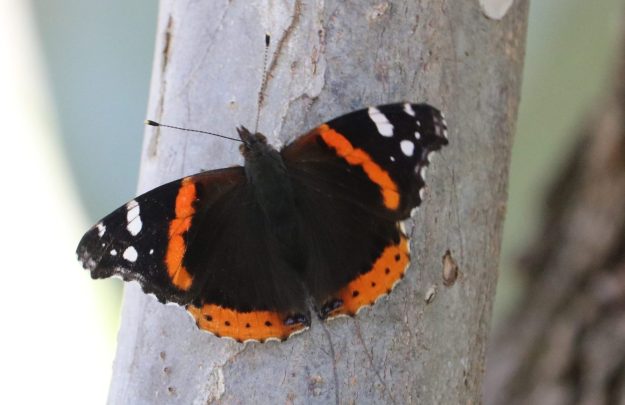
The Painted Lady butterfly, Vanessa cardui, claims the title as most common butterfly in North America–and inhabits almost every corner of the globe.  The multi-colored flutterers brag five white spots on each black-and-orange forewing and have been tapped

Painted Lady Butterfly

The Painted Lady Butterfly is being studied to develop micro aerial vehicles, MAVs.

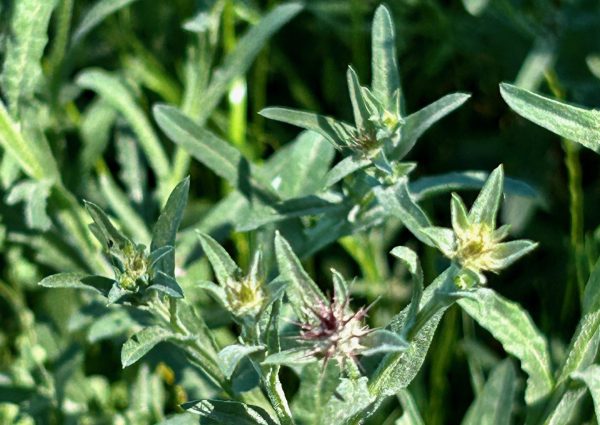
for elementary school science classes for years since they are readily available and can complete their life cycle on an artificial diet.  In the wild, Painted Ladies host on thistle and a variety of common weeds.

But now this common butterfly is helping scientists figure out the intricacies of micro aerial maneuvering in a study at John Hopkins University that will hopefully lead to refinements in a new class of tiny flying machines:  micro aerial vehicles,  or MAVS.

Painted Lady butterflies tapped to develop MAVs

Painted Lady butterflies tapped to develop MAVs: CLICK to view the video.

A team of researchers at the Maryland campus has received funding from the U.S. government to study flight in butterflies with the intent to develop tiny flying robots that can be used for intelligence gathering, reconnaissance, and search-and-rescue missions.

Butterfly inspired flapping wing MAV "micro aerial vehicle"

Butterfly inspired flapping wing MAV "micro aerial vehicle" --photo courtesy Harvard University

“We look to nature for inspiration,” said Tiras Lin, an undergraduate mechanical engineering student at John Hopkins who is working on the study.  ”What can we learn from the flight…of a butterfly?”

A lot, apparently.

Lin and his team used three high speed 3-D cameras to closely observe tthe Painted Lady’s amazing agility and maneuverability.  Click on the second photo in this post to see the video and some of the fascinating footage.

He compared the creature’s aerial maneuvers to those of an ice skater, suggesting that like a spinning skater, they “alter their moment of inertia” depending on whether they want to speed up or slow down.

Rajat Mittal, a professor of mechanical engineering at John Hopkins and who is overseeing the study, pointed out that mechanical engineers typically are well-suited and successful at designing large things like aircraft or ships” but when it comes to designing small things we are fairly deficient.”

The Painted Lady is providing insight and inspiration, making her not so common after all.

Like what you’re reading?  Follow butterfly and native plant news at the Texas Butterfly Ranch. Sign up for email delivery in the righthand navigation bar of this page, like us on Facebook, or follow us on Twitter, @monikam. 
Posted in Painted Ladies, Uncategorized | Tagged , | Leave a comment

Banner Butterfly Year Caused by “Ecological Release” in Texas, says Monarch Watch Founder Dr. Chip Taylor

Texas has been called the “most important state” to the Monarch butterfly migration by Monarch Watch founder Chip Taylor.   Now our Lone Star State is getting attention for spawning an “ecological release” that has resulted in a butterfly “season like no other,”  Taylor told the Hornell Evening Tribune in New York.

Banner year for butterflies, thank you, Texas!

Banner year for butterflies. Thank you, Texas!

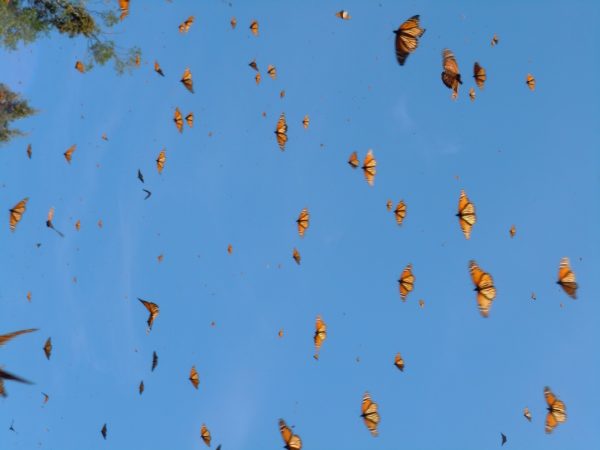
“This year continues to amaze,” Dr. Taylor wrote to the DPLEX email list, well-read by hundreds of academics, enthusiasts and others who follow the Monarch butterfly migration.   Taylor detailed ample and early sightings of Monarchs, Sulphurs, Red Admirals, Buckeyes and other species to the Midwest.   Watch the video above for examples.

Taylor and others attribute the 2012 banner butterfly year to a perfect storm of circumstances in Texas, including:

  •  An historic drought which killed butterfly and caterpillar predators, notably fire ants, followed by
  • Generous, well-timed rains, a mild winter that caused host and nectar plants to flourish, and caterpillars and butterflies to thrive.

Eventually, host plant and nectar populations will drop back to normal, as will this year’s butterfly explosion.

In the meantime, enjoy the show.

Like what you’re reading?  Follow butterfly and native plant news at the Texas Butterfly Ranch. Sign up for email delivery in the righthand navigation bar of this page, like us on Facebook, or follow us on Twitter, @monikam. 
Posted in Butterfly Life Cycle, Butterflybeat, Monarch Butterfly, Monarch Watch, Texas Hill Country, Where to see butterflies, wildflowers | Tagged , , , , | 1 Comment

Want to Meet the Beetles? Better Hurry, Removal of Milkweed Beetles from San Antonio River’s Milkweed Patch Imminent

An invasion of red-and-black milkweed beetles have made a temporary eyesore of the San Antonio River’s celebrated Milkweed Patch on the Museum Reach.  The striking insects, whose colorful torsos suggest the patterns of a tiki mask, have moved into the 1200-square foot Tropical milkweed garden on the banks of the San Antonio River just south of the Pearl Brewery  in a classic play of nature’s cycles.

Milkweed Beetles have taken over the Milkweed Patch

Milkweed Beetles have taken over the Milkweed Patch

The beetles, which look like ladybugs on steroids, don’t bite, sting or carry diseases. They do, however, defoliate milkweed plants, and have left the highly trafficked stretch of the River with some unattractive bald spots.

Migrating Monarch butterflies moved through town earlier this spring, laying the first generation of eggs in their annual migration at the Milkweed Patch.  The resulting acrobatic caterpillars occupied the Patch, feasting on milkweed leaves, the Monarch butterfly host plant.  Late straggling Monarchs continue to mingle with our local colony but the pervasive milkweed beetle, Labidomera clivicollis, dominates.

Milkweed Patch going bald thanks to milkweed beetles

Milkweed Patch going bald thanks to milkweed beetles

Volunteers for the Monarch Larvae Monitoring Project (MLMP), a citizen scientist program based at the University of Minnesota and which aims to better understand the Monarch life cycle and migration, have noticed fewer Monarch caterpillars and chrysalises during their weekly observations as beetles consume the milkweed leaves.

Discussions ensued about possibly pruning the milkweeds, which typically die back in winters when a hard freeze occurs.   That didn’t happen this year.  But San Antonio River Authority staff determined a better approach would be to hand-remove the beetles, THEN prune the plants.

Milkweed beetles have defoliated the Milkweed Patch. But aren't they cute?

Milkweed beetles have defoliated the Milkweed Patch. But aren't they cute?

“We believe this to be a holistic management approach with minimal negative impact to the environment that is consistent with our commitment to the local community for the project, ” said Steven Schauer, Manager of External Communications at the San Antonio River Authority (SARA), which oversees maintenance of the area.   The Museum Reach stretch of the San Antonio River was designed as a manicured, urban park setting, unlike the Mission Reach section, which is managed as a native riparian restoration.

SARA deserves praise for working with MLMP  volunteers and resisting the use of pesticides to address the problem.   A round of pesticides would quickly rid the area of

Gulf Fritillary

Gulf Fritillary, photo courtesy NABA.org

beetles (and other plant pests) and would also jeopardize the Monarchs’ and other butterflies’ continued colonization of the River.  Just north of the Milkweed Patch is a huge Passionflower planting, where Gulf Fritillary butterflies have made their home and are breeding.

If you’d like to “meet the beetles,”  better do so in the next few days.  The critters will be less visible once the hand removal is accomplished.

Like what you’re reading?  Follow butterfly and native plant news at the Texas Butterfly Ranch. Sign up for email delivery in the righthand navigation bar of this page, like us on Facebook, or follow us on Twitter, @monikam. 
Posted in Butterfly Life Cycle, Butterflybeat, climate change, Insectomania, Milkweed, Monarch Butterfly, Monarch caterpillar, Monarch Migration, San Antonio Museum Reach, Where to see butterflies | Tagged , , , , , , , , , , | 8 Comments

Wings Over the Hills Nature Festival in Fredericksburg to Celebrate Butterflies, Bats and Birds this Weekend

Fredericksburg’s Wings Over the Hills Nature Festival takes place this weekend and brings a welcome respite from San Antonio’s 10-days of Fiesta.  Just a one-hour, wildflower-loaded drive from San Antonio or Austin, the event celebrates the unique winged wildlife of the Texas Hill Country.

The festival provides 72 hours of nature-oriented education and entertainment.   Guided nature walks, butterfly, birding and bat presentations, a raptor display, and a Star Party on Saturday night at a remote ranch that brags a 360-degree skyscape unsullied by light pollution, fill the three-day schedule.

I can’t wait.   Even though I’ll be presenting two talks on Monarch butterflies, I plan to grab a seat at award-winning nature photographer Rolf Nussbaumer‘s nature

Monarch buttefly on hummingbird feeder

I'll be talking about Monarch butterflies at the Wings Over the Hills Festival this weekend.

photography class, Ro Wauer‘s overview of Hill Country butterflies, Diane Oegard’s talk on bats, and James Laswell‘s presentation on dragonflies.  Early Saturday and Sunday mornings, birding, butterflying and dragonfly “chases” take place, guided tours held at Ladybird Johnson Park and other outdoor venues.

On Friday at 6 PM,  Master Falconer John Karger of Last Chance Forever, Birds of Prey will do his raptor show at the Fredericksburg High School Auditorium.   Karger helped me celebrate my birthday a couple of years ago by releasing two Coopers Hawks at our

John Karger, Last Chance Forever

John Karger, Last Chance Forever

place on the Llano River.   The raptors had tangled with an electrical line and were injured, unable to fly until Karger’s organization nursed them back to health.  I’ll never forget them perching momentarily on my leather-gloved forearm before they took flight.  Now whenever I see Coopers Hawks soaring over our stretch of the river, I assume they are my birthday raptors.

Karger’s work is laudable and his show starring rehabilitated owls, falcons, hawks, vultures and eagles unforgettable.

The Star Party on Saturday night, 9 PM, should be spectacular.  Anyone who has ever visited the McDonald Observatory’s weekend Star Parties in West Texas can attest to the majesty of a completely dark sky twinkling with millions of stars you’ve only seen in photographs.   Shooting stars are practically routine in such circumstances, so if you attend, bring your wish list and make a wish.

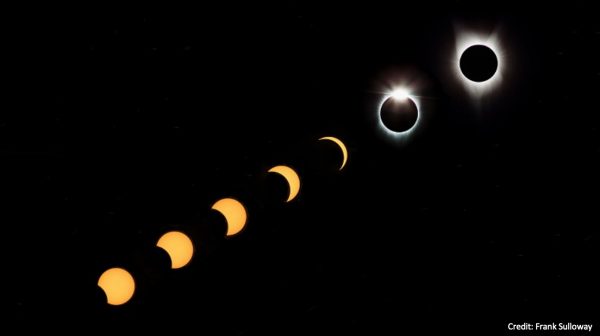
Members of the Fredericksburg Astronomy Club will be on hand with telescopes,  orientation talks and explanations of the constellations and satellites.  It should be a great time to see Venus, which is staging its last transit for more than a century before crossing the face of the sun on June 6. According to the stargazing website Stardate,   Venus will be at its most brilliant this weekend, “shining 20 times brighter than the brightest true star in the night sky.”

Organizers have done an excellent job breaking up the programs, field trips and events so visitors can partake at their own pace, picking and choosing all or some of the offerings.  A weekend pass goes for $40 and provides entry into many events;  day passes $15.  Star Party, raptor show, motor coach tours and photo class are separate, and some don’t require a festival pass at all.   For details, see the Wings Over the Hills website.

Posted in Monarch Butterfly, Texas Hill Country, Where to see butterflies, wildflowers | Tagged , , , , | Leave a comment

Austin’s Insecta Fiesta to Host World’s Largest Katydid and Butterfly Flyhouse with 500 Butterflies

Rotten bananas and grape Gatorade for feeding the butterflies?  Check.  Largest Katydid in the world for the insect petting zoo?  Delivered safe and sound.  Cockroach tractor pull assembled and swept?  Done.  Oh, and frozen crickets for the cricket spitting contest?  Almost time to time to thaw them out.

Assembling an Earth Day weekend celebration for the First Annual Insecta Fiesta in Austin has required  thousands of volunteer hours by more than 140 staff and volunteers. Yet final preparations for the daylong celebration of the most diverse species on the planet are almost complete.  The event takes place this Saturday, April 21, 11 AM -4 PM at the Brackenridge Field Labs,  3001 Lake Austin Boulevard.  It’s FREE.

Katydid or Katydidn't?  Insecta Fiesta to feature largest katydid in the world

Katydid or Katydidn't? Insecta Fiesta to feature largest katydid in the world --photo by Challiyil Eswaramangalath Vipin from Chalakudy, India via Wikimedia Commons

The inaugural bug fest, organized by The Texas Natural Science Center in Austin, will celebrate insects and anticipates a large crowd this Saturday.  More than 150 teachers from all over the state have registered for teacher training to be used in Texas classrooms.   Free parking and shuttle buses have been arranged at the LCRA  lot.  The educational event will feature a live butterfly house, a cricket spitting contest, cockroach races, entomophagy, or the exercise of eating insects for their inexpensive protein, and the largest, loudest Katydid on the planet.  ”It’s the size of a small sparrow,” said KUT’s John Aielli when the creature paid a visit to his radio show on Thursday.

Why celebrate insects?

“They’re so under appreciated,” says Dr. John Abbott, Curator of Entomology for the Texas Natural Science Center and a chief organizer of the event.  ”Insects tie all our ecosystems together.  They’re found everywhere, except in the open ocean, in every habitat and microhabitat.   They dominate the planet and they literally tether the ecosystems,”  he says.

And yet given their pervasive presence in our food, water, air and earth, insects have not received their fair share of conservation attention.   Some would argue that if Pandas disappeared, it wouldn’t matter much;  but if certain insects were extinct–bees, for example–the world would be irrevocably changed for the worse.  ”It’s more important than ever to understand the impact of climate change and habitat destruction on insects,” says Dr. Abbott.

The Texas Butterfly Ranch is a sponsor of the celebration.  With the help of Flutterby Gardens of Manatee and funding from Austin’s Peggy and Matt Winkler, we’ll help supply butterflies for a butterfly house that will include 500 live lepidoptera.

Cricket spitting, a questionable competition in which one inserts a cricket in mouth and then spits it out, will also be a highlight.   The cricket spit the furthest wins the competition.  The “sport” has been popularized by Purdue University’s annual indoor Bug Bowl with a record of 32 feet.  Since the Insecta Fiesta contest will be the first OUTDOOR cricket spitting contest, whoever wins the competition can claim to set a new Guinness Book of World Record.

Other insect activities:

  • Insect Petting  Zoo 
  • Insect Cooking/Eating Tent  
  • Live Insect-Themed Music  
  • Cricketspitting Contest  
  • Cockroach Races 
  • Butterfly Garden/Flyhouse
  • Insect Safari
  • Austin Bike Zoo
  • Insect Workshops for Teachers to earn CPEs
  • Pond Dipping
  • Forensic Entomology
  • Arts/Crafts

The free K–12 teacher training workshop offers six hours CPE credit and curriculum materials correlated to the Science TEKS. Teachers will learn how to use insects to teach about animal adaptations, ecosystems, evolution, and more.   Register for the workshop here. Contact Christina Cid with questions about the teacher training.

Insecta Fiesta this Saturday 11-4 at Brackenridge Field Labs

Insecta Fiesta this Saturday 11-4 at Brackenridge Field Labs in Austin

WHAT:         Insecta Fiesta

WHEN:         Saturday, April 21, 11 AM – 5 PM.  FREE.

WHERE:       Lake Austin Center – Brackenridge Field Lab 3001 Lake Austin Blvd.
Austin, Texas 78703
PARKING:  Free at the LCRA lot, with shuttles to entrance

Hope to see you there!

Like what you’re reading?  Follow butterfly and native plant news at the Texas Butterfly Ranch. Sign up for email delivery in the righthand navigation bar of this page, like us on Facebook, or follow us on Twitter, @monikam. 
Posted in Events, Insectomania, Where to see butterflies | Tagged , | Leave a comment

Desperately Seeking Milkweed: Monarch Butterfly Caterpillars’ Voracious Appetites Create Milkweed Emergency

Anyone have any emergency milkweed? The 30 or so caterpillars have totally stripped mine and the nurseries don’t seem to have any. I really don’t want to lose them. –T. Kinsey, San Antonio

I, too, have run out of food (asclepias tuberosa) for my Monarch caterpillars. I have approximately 14 caterpillars ranging from the 1st through the 5th instar. The little ones can’t eat the hard stem, which is all that is left. I am scrambling around asking everyone I know if they have any butterfly milkweed and so far, no luck.  –C. Nugen, Stephenville

I have a great number of monarch caterpillars on the milkweed plants in my garden,  more than I have ever seen!! Only thing is,  I think there are more than there is food. Will they find nearby plants to eat or start eating the stems of the plant? Please help as I am bit worried that they will not all get to the next life stage.  –L. Jarvis, San Antonio

Monarch butterflies have been arriving in the “Texas funnel” for weeks, laying their first generation of eggs on milkweeds in yards, gardens, and throughout the state.  But judging from emails, text and Facebook messages I’ve been getting, we just don’t seem to have enough milkweed to keep up with their voracious appetites.  The creatures eat 200x their birthweight in milkweed leaves by the time they bust their stripes to form their gold-flecked jade chrysalises.

The milkweed shortage appears to be the result of the Monarchs’ early arrival and crazy weather this year.  When the Monarchs arrived in March, a lot of wild milkweed wasn’t even out of the ground yet.    The wet, mild winter provoked a bountiful wildflower showing, creating serious competition from more aggressive species.   Then we had a slew of 80- and 90-degree days that sped up growth of both the caterpillars and plants.   Result?  Lots of caterpillars and not enough food.

What to do if you find yourself with dozens of hungry caterpillars and no milkweed for them to feast on?  If  you don’t have access to milkweed in the wild nor from fellow gardeners, your best bet is to call local nurseries and ask if they have any Asclepias in stock.   Be sure to ask for Asclepias, the scientific name, since it’s not unusual for nurseries to sell “butterfly bush” or “butterfly weed” which are great nectar plants (often in the Buddleia family) for all types of butterflies, but useless for hosting Monarchs or other milkweed feeders.

Next, tell the nursery staff that you are raising caterpillars.   That means the plants you purchase for caterpillar food must be free of systematic pesticides.  Nursery staff will often swear they have not sprayed anything on the plants, but that doesn’t mean the grower didn’t.

Fat and happy Monarch cats devoured Sharon Sander's milkweed

Fat and happy Monarch cats devoured Sharon Sander's milkweed patch

Two friends experienced this difficult lesson in the past week.  Sharon Sander emailed with joyous photos of hundreds of Monarch caterpillars decimating the milkweed patch  at the River Road Community Garden.  Sander asked if I had any extra milkweed.  Since I did not, I encouraged her to seek out pesticide-free milkweed at one of our local nurseries.

Beautiful Asclepias Curassavica from Shades of Green turned out to be full of pesticides

Beautiful Asclepias Curassavica from Shades of Green turned out to be full of pesticides

Sander located milkweed at Shades of Green Nursery in San Antonio.  She explained to nursery staff that she was raising caterpillars and was told no systematic pesticides had been used.   She brought the plants home and moved 200 caterpillars to the robust plants.

The next day, “They all died,” Sander wrote via text message.  Sander contacted Shades of Green, an excellent nursery, and was given pesticide-free replacement plants.  Still, a sad lesson.

Wendy Meyer, co-manager of Shades of Green was very apologetic about the incident and said that unbeknownst to Shades of Green, the grower had used the pesticide Dursban (chlorpyrifos) on the milkweed plants.  Supposedly Dursban dissipates in 10-14 days, but in the meantime is readily absorbed into the plant tissue and anything that eats the plant.

Boo-hoo! Dead Monarch caterpillars fall victim to pesticide laced milkweed

Boo-hoo! Dead Monarch caterpillars fall victim to pesticide laced milkweed

Jenny Singleton of Grapevine relayed a similar story.  Upon leaving town for vacation, she stocked up on milkweed for the hungry Monarch caterpillars she was leaving behind.  ”I went to my favorite nursery to buy more milkweed and left the new, full plants next to the eaten up ones,” Singleton wrote in an email. “Checked on them this AM and to my horror, I’ll bet 75% were dead! I was sick!”

Unfortunately, nurseries don’t always know their growers as well as they  should.  And most plant shoppers won’t buy plants with bugs on them.   Milkweed plants are an ecosystem unto themselves and attract aphids, milkweed beetles, milkweed bugs, various flies and wasps.  Pesticides will kill all these pests–as well as Monarch eggs and caterpillars. It’s a challenge for growers who are often inclined to spray plants immediately before shipping to make them attractive and insect free to shoppers.

Tropical milkweed is easy to grow

Tropical milkweed is easy to grow

If you don’t know the provenance of your host plants, the best solution is to GYO (grow your own) milkweed.  Milkweed flowers develop a plump seed pod.  Tropical milkweed, while not native, is easy to grow and a Monarch butterfly magnet.  Remove the seeds from the milkweed fluff and sow in pots or the garden.  We’ll detail that process in a future post.

Like what you’re reading?  Follow butterfly and native plant news at the Texas Butterfly Ranch. Sign up for email delivery in the righthand navigation bar of this page, like us on Facebook, or follow us on Twitter, @monikam. 
Posted in Butterfly gardening, Butterfly Life Cycle, Milkweed, Monarch Butterfly | Tagged , , , , , | 34 Comments

How do Caterpillars Move? They Go with Their Gut–A Unique Form of Locomotion and a Crazy, Amusing Crawl

The caterpillar stage of a butterfly’s life is as interesting–sometimes moreso–than that final phase, when it unfolds its wings and takes first flight.   To witness eclosion, the moment when the chrysalis becomes a butterfly, is without a doubt magical.

But just as endearing is watching caterpillars move, wobbling, crawling, and creeping on flowers turning their expressive filaments and twisting  torsos like trapeze artists at Cirque de Soleil.

Given that caterpillars have no bones in their entire bodies, not even the crisp ektoskeletons of  insects like roaches or beetles, it’s hard not to ponder:  how, exactly, do caterpillars move?

Sphinx Moth caterpillar on Jimsonweed

Look for Tobacco Hornworms on Jimsonweed and your tomato plants

Turns out they go with their gut.   Literally. A groundbreaking study conducted last year in which scientists have the  intriguing critters walking on treadmills while x-rays scanned their wormy bodies indicated that the first step in a caterpillar’s stroll is taken by its gut.

Scientists observing the Manduca sexta, or tobacco hornworm caterpillar via X-ray learned that when caterpillars walk, their guts move first, with the rest of their bodies following behind in a rippling motion.  Think of one of those wave perpetual motion machines.

A caterpillar  ”can burrow, it can climb, it can navigate through complex terrain,” said biologist Barry Trimmer and his team at Tufts University, who are fashioning soft bodied robots designed after the Tobacco Hornworm.

Caterpillars are everywhere right now with the warm, wet winter.  Just look under leaves and in lush growth and you’re likely to find one.  When you do, check out those moves, you’ll be amazed and delighted.

Like what you’re reading?  Follow butterfly and native plant news at the Texas Butterfly Ranch. Sign up for email delivery in the righthand navigation bar of this page, like us on Facebook, or follow us on Twitter, @monikam. 
Posted in Butterfly Life Cycle | Tagged | Leave a comment

Bats, Blooms, Butterflies and Moths–Everyone is Early this year

Our wet and mild winter has migratory creatures and seasonal blooms arriving in Central and South Texas early this year.  According to biologists and naturalists, we’re running seven – 10 days ahead of schedule.

Monarch butterflies, which typically start showing up in Texas en masse in late March, have been spotted regularly since early in the month.  Over at Bracken Bat Cave, maternal bats who overwinter in Mexico also arrived ahead of schedule.

Caterpillar on Bluebonnet

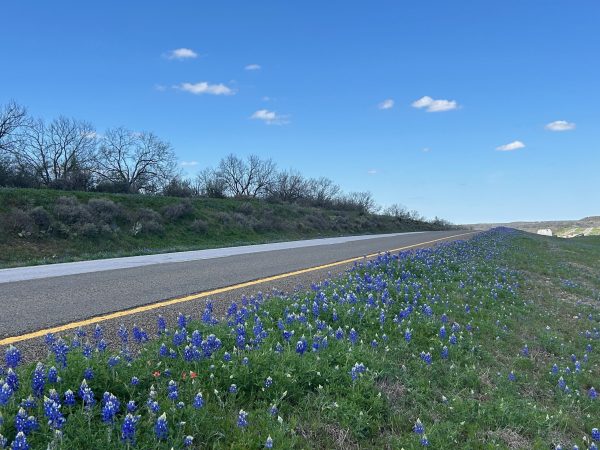
Caterpillars and bluebonnets--both early this year

“This year they were 10 days early,” says Fran Hutchins, Bracken Bat Cave coordinator and a Texas Master Naturalist.  Hutchins adds that the insect eating mammals began showing up in waves around February 21.  ”There hasn’t been a lot of research on specific dates of their comings and goings,” says Hutchins, explaining that he inadvertently noticed the increase in bat population while completing an overwintering survey at the Cave. Congress Ave. Bridge bats returned early this year.

Congress Ave. Bridge bats were early this year

Bats returned early this year

The pattern holds for wildflowers and birds. “It’s definitely early,” says Andrea Delong-Amaya, director of Horticulture at the Ladybird Johnson Wildflower Center. “But in terms of what’s normal, it’s hard to say.  It just hasn’t been as cold.”  Reports of the Golden Cheeked Warbler, our local endangered songbird, arriving a bit early have made the rounds at the San Antonio Audubon Society, according to Martin Reid, an avid birder and environmental consultant.

“It’s a mixed bag: some of our resident birds are showing signs of breeding activity slightly earlier than usual–probably related to rain,”  he explains.  ”But it doesn’t seem to have much effect on the wintering birds.”

Is it the warmth or the wet that drives the timing?   Depends on who you ask.

“On average I think the Weather Service is better than us insect experts at predicting the future,” says Dr. Mike Merchant, writing on Texas Agrilife Extension’s delightful Insects in the City blog. “But I still don’t put too much stock in long-term weather forecasts.”   Dr. Merchant chronicles the early arrival of Armyworms to North Texas in a recent post.   The gregarious grass eaters get their name from reproducing in droves and marching across prairies in soldier-like formations.

Armyworm Moth in Lawn

Armyworm Moths have arrived early to North Texas -- photo Texas Agrilife Extension

Matt Reidy points to the weather.  ”Pepper weeds, bluebonnets, prickly poppies–those are all early.  Not because of temperatures, but because of rain,”  says Reidy,  Texas Parks and Wildlife Biologist.  ”When you get the moisture, that’s what determines what you’re gonna get when.”

Many peg climate change for the advance of the season.   Interestingly, February 2012′s average high temperature was about the same as–actually .07 degree less than–the historic average of 66 degrees in San Antonio.   Yet, the average LOW temperature for the month was 4.5 degrees higher than average.

Minimum temperatures are especially impactful to seed germination and plant growth.  Seeds and plants require a certain soil temperature in which to germinate and thrive.  Savvy gardeners know to put a heating pad under setting seeds to expedite sprouting. Higher average minimum temperatures translate into faster growth, and an earlier season.

At the Children’s Garden at the San Antonio Botanical Garden, volunteers planted tomatoes the first week in March–”weeks early,” according to David Rodriguez, Horticulture specialist for the Texas Agrilife Extension.  Those tomatoes will likely be ready the first week in May.   “Everything’s off,” says Rodriguez, referring to Nature’s unpredictable timing.

Earlier this year, the USDA announced changes in plant hardiness zones, moving parts of San Antonio into the same planting zone as Houston and Corpus Christi. Some San Antonio zip codes moved from zone 8b, with annual lows of 15 – 20 degrees, to zone 9a, with annual lows of 20-25 degrees.

The redrawn maps (plug in your zip code and find out your zone here)  seem to be telling us something that birds, butterflies and bats have known for awhile: it’s just not as cold as it used to be.

Like what you’re reading?  Follow butterfly and native plant news at the Texas Butterfly Ranch. Sign up for email delivery in the righthand navigation bar of this page, like us on Facebook, or follow us on Twitter, @monikam.


Posted in Butterfly gardening, Butterfly Life Cycle, climate change, Drought, Moths, wildflowers | Tagged , , , , | 5 Comments

Save the Date: Insecta Fiesta Austin to Feature Live Butterfly House, Cricket Spitting Contest, Cockroach Races

The Texas Natural Science Center in Austin will host a celebration of insects April 21 in the form of the First Annual Insecta Fiesta.   The FREE educational event will feature a live butterfly house, a cricket spitting contest, cockroach races, entomophagy, or the exercise of eating insects for their inexpensive protein, teacher training, and much more.

Insects are cool.  Really!

Insects are cool. Really!

Those of us who took Botany for Gardeners at the University of Texas fondly remember the  Brackenridge Field Lab, an 88-acre spread which hugs the shores of Lake Austin and serves as the site of the bug fest.   The outdoor laboratory, considered a premier urban field research station for helping academics and others to study climate change, invasive species, biodiversity, animal behavior, evolution and more, is generally closed to the public.

But on Saturday, April 21, the facility opens its gates in an attempt to make insects more accessible and understood.

Why celebrate insects?

“They’re so under appreciated,” says Dr. John Abbott, Curator of Entomology for the Texas Natural Science Center and a chief organizer of the event.  ”Insects tie all our ecosystems together.  They’re found everywhere, except in the open ocean, in every habitat and microhabitat.   They dominate the planet and they literally tether the ecosystems,”  he says.

Malachite Butterfly looks like a green Monarch --photo courtesy NABA

Malachite Butterfly looks like a green Monarch --photo courtesy NABA

Insects have always captivated people because of their beauty and intrigue, says Dr. Abbott, adding  that we find images of them everywhere:  on plates, drapes, earrings, stamps, tattoos, t-shirts.

And yet given their pervasive presence in our food, water, air and earth, insects have not received their fair share of conservation attention.   Some would argue that if Pandas disappeared, it wouldn’t matter much;  but if certain insects were extinct–bees, for example–the world would be irrevocably changed for the worse.  ”It’s more important than ever to understand the impact of climate change and habitat destruction on insects,” says Dr. Abbott.

The Texas Butterfly Ranch is a sponsor of the celebration.  With the help of Flutterby Gardens of Manatee and funding from Austin’s Peggy and Matt Winkler, we’ll help supply butterflies for a butterfly house that will include 500 live lepidoptera.

Monarchs, Gulf Fritillaries, Painted Ladies, Red Admirals, Swallowtails–even some sexy Malachites, which we don’t see all that often even though they’re native to South Texas–are scheduled to be flying in a converted greenhouse that organizers and volunteers have spent weeks preparing.  
Cricket spitting contest -- photo by www.purdue.edu

Cricket spitting contest -- photo by www.purdue.edu

Cricket spitting, a questionable competition in which one inserts a cricket in mouth and then spits it out, will also be a highlight.   The cricket spit the furthest wins the competition.  The “sport” has been popularized by Purdue University’s annual indoor Bug Bowl with a record of 32 feet.  Since the Insecta Fiesta contest will be the first OUTDOOR cricket spitting contest, whoever wins the competition can claim to set a new Guinness Book of World Record.

Other insect activities:

  • Insect Petting  Zoo 
  • Insect Cooking/Eating Tent  
  • Live Insect-Themed Music  
  • Cricketspitting Contest  
  • Cockroach Races 
  • Butterfly Garden/Flyhouse
  • Insect Safari
  • Austin Bike Zoo
  • Insect Workshops for Teachers to earn CPEs
  • Pond Dipping
  • Forensic Entomology
  • Arts/Crafts

A free K–12 teacher training workshop will also be offered during Insecta Fiesta. Teachers will receive six hours CPE credit and curriculum materials correlated to the Science TEKS. Teachers will learn how to use insects to teach about animal adaptations, ecosystems, evolution, and more.   Register for the workshop here. Contact Christina Cid with questions about the teacher training.

WHAT:         Insecta Fiesta
WHEN:         Saturday, April 21, 11 AM – 5 PM.  FREE.
WHERE:       Lake Austin Center – Brackenridge Field Lab 3001 Lake Austin Blvd.
Austin, Texas 78703
PARKING:  Free at the LCRA lot, with shuttles to entrance

Hope to see you there!

Posted in Insectomania, Where to see butterflies | Tagged , | Leave a comment

Number of Monarch Butterflies Down as They Leave Michoacan and Head through Texas

The Monarch butterfly population status report was made public this week. Given last year’s perfect storm of bad conditions–late freeze, historic drought, raging wildfires–butterfly followers were expecting bad news.  It was.  Overall Monarch butterfly numbers were down 28%.

Monarch butterflies are leaving Michoacan and heading to....Texas!

Monarch butterflies are leaving Michoacan and heading to Texas.

The much anticipated document issued each spring by the World Wildlife Fund assesses the overall health of the migrating population by calculating the physical space they occupy in the Oyamel fir forests of Michoacan, Mexico.  This year, the millions of butterflies occupied a little more than seven acres.   The average is almost 18 acres.

Monarch Watch, a Monarch butterfly monitoring program based at the University of Kansas at Lawrence, put a positive spin on the findings, tagging the report “relatively good news,”  given dismal expectations.  ”Nevertheless, this represents another low population – one well below the long term average near seven hectares,” the citizen scientist and academic collaborative reported.

The report was issued especially late this year, on March 15, an act that aggravated scientists and left others wondering why it took so long.  ”The international scientific community is baffled why it  took so long for WWF and others to release the colony data for the current overwintering season,” wrote renown Monarch butterfly scientist Dr. Lincoln Brower in an email to the DPLEX list, a butterfly listserv followed avidly by

Monarch butterflies are on the move in Texas

Monarch butterflies are on the move in Texas

butterfly enthusiasts and scientists.  ”The long delay actually hampered research planning for important molecular studies by the scientific community.”   Brower challenged WWF officials on the reasons for the decline, suggesting that while crazy weather and habitat loss tied to herbicide tolerant crops are factors, illegal logging and “severe degradation of the Oyamel forest ecosystem has been and still is occurring.”

Interestingly, a spokesperson for PROFEPA, the equivalent of the Environmental Protection Agency in Mexico, said earlier this year that illegal logging at the roosting grounds had been contained to 3.7 acres.

The good news is that the butterflies have left their Mexican roosts and are coming our way. Reports from Twitter, Facebook and butterfly listservs detail FOS (first of season) sightings of the migrating butterflies flitting through Texas, laying eggs on native and tropical milkweed plants, delighting gardeners and butterfly fans.

Kip Kiphart, a volunteer for the Monarch Larvae Monitoring Project at Cibolo Nature Center in Boerne reported via email that he found 27 eggs on his native milkweed plants in Bergheim, Texas this week.  Others chimed in:   “Saw two in my  yard in southwest Austin,” said Helen Boudny Fremin. “We’ve had a couple in Marathon this past week,” reported Mathew York.  ”Pretty sure I saw a Monarch butterfly yesterday,” tweeted Mike Leggett, an outdoor writer in Austin. Those migrating Monarchs presumably will visit San Antonio’s local colony over at the Museum Reach Milkweed Patch for some mixed company nectar sipping.

Monarch butterflies have left Michoacan and been spotted all over Texas

Monarch butterflies have left Michoacan and been spotted all over Texas

Texas has been called the “most important state” to the Monarch butterfly migration because of its strategic location between the roosting grounds and the milkweed beds and nectar prairies that serve as hosts and food sources for the famous insects.   Millions of Monarchs pass through Texas each spring and fall as they make their multi-generation migratory flight from the Mexico to Canada and back.  Spring in Texas is a critical time for the Monarchs, as they seek out milkweed plants–their host, and the only plant on which they will lay eggs–to continue their multi generation migration north.

With our exceptional and well-timed South Texas rains this winter, the Monarchs will have plenty of wildflowers for nectar and milkweed  for reproducing. Time to plant more milkweed in our gardens to get the migration off to a good start.

Like what you’re reading?  Don’t miss a single post from the Texas Butterfly Ranch. Sign up for email delivery in the right navigation bar on this page, like us on Facebook, or follow us on Twitter, @monikam.
Posted in Butterfly Life Cycle, Mexico, Monarch Butterfly, Monarch Migration | Tagged , , , , , | 13 Comments